

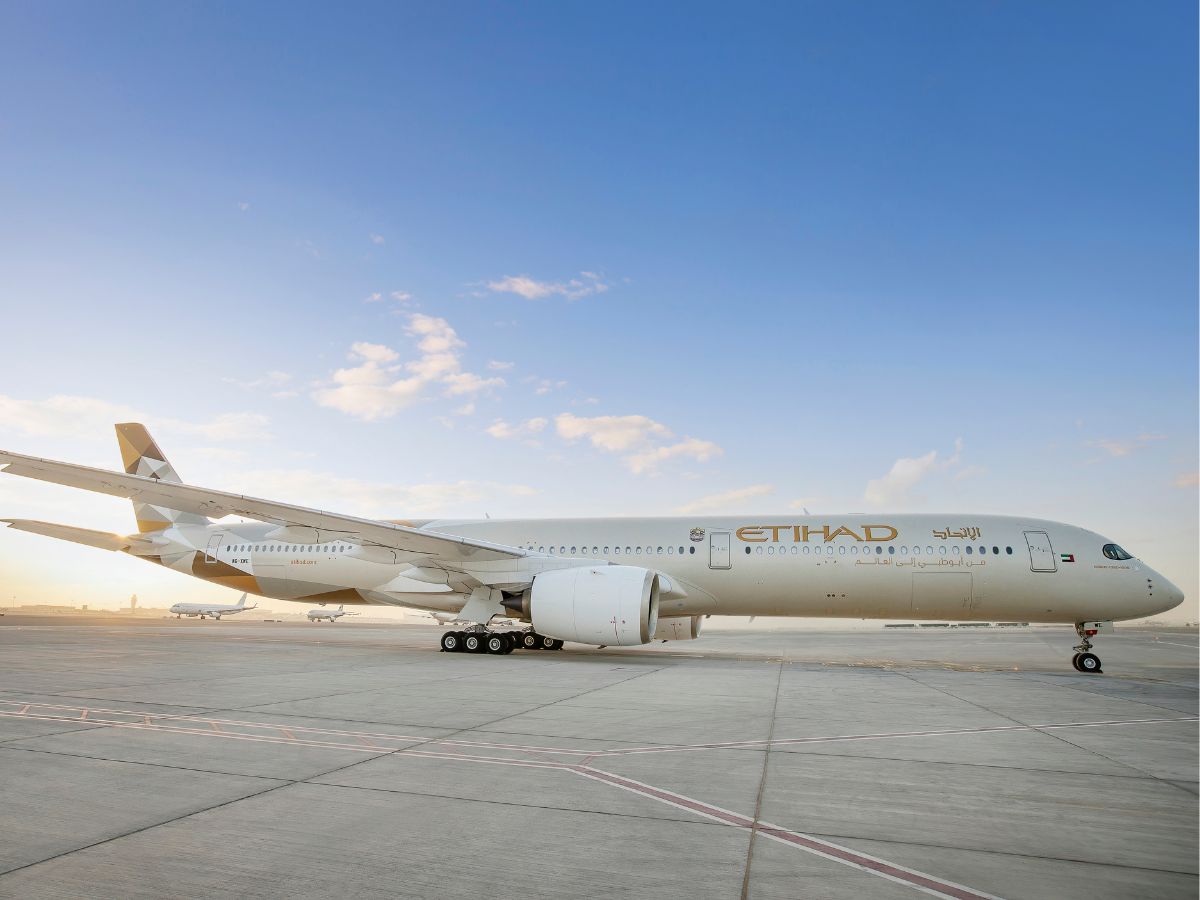
Abu Dhabi-based carrier Etihad Airways will add 13 destinations to its network in 2026, including new routes to the United States, Europe and the Middle East, as Gulf airlines ramp up capacity to meet rising travel demand.
The expansion comes amid continued growth in the region’s aviation sector. The Airports Council Internationalforecasts the Middle East will handle 466 million passengers in 2025, cementing its position as one of the fastest-growing aviation markets worldwide.
Etihad reported carrying 2.2 million passengers in January 2026, a 29% increase from the same month a year earlier. The airline is responding by widening its network from its Abu Dhabi hub.
Among the headline additions is a four-times-weekly service to Charlotte, starting May 4, 2026, marking Etihad’s first direct connection to the U.S. city. In Europe, the carrier will introduce routes to Bucharest, Krakow, Kazan and Palma de Mallorca, with several services launching in the summer season.

The airline will also expand in Central Asia and the Caucasus, adding flights to Tbilisi and Tashkent, and strengthen regional connectivity with new services to Medina, Salalah and Damascus. Seasonal routes to Baku and the Tanzanian island of Zanzibar will operate during peak travel months.
Several routes will run multiple times per week, while Palma de Mallorca and Zanzibar will operate as summer seasonal services. The Palma route will be served by Etihad’s Airbus A321LR aircraft.
Other UAE carriers are also increasing frequencies and adding destinations. Dubai-based Emirates plans to expand services to London Gatwick, Cairo, Nairobi, Cape Town, Copenhagen and Helsinki in 2026, adding aircraft and increasing daily frequencies on several routes. Meanwhile, low-cost carrier Air Arabia will begin twice-daily flights between Sharjah and London Gatwick from March 29.
The network growth reflects intensifying competition among Gulf carriers, which continue to position their hubs as key transit points between Europe, Asia, Africa and North America. Airlines in the region have invested heavily in fleet modernization and long-haul expansion to capture both point-to-point and connecting traffic.
Industry analysts say sustained passenger growth will depend on global economic stability, fuel prices and geopolitical conditions. For now, however, the aggressive route expansion signals confidence that demand for international travel to and through the UAE will remain strong into 2026 and beyond.
