

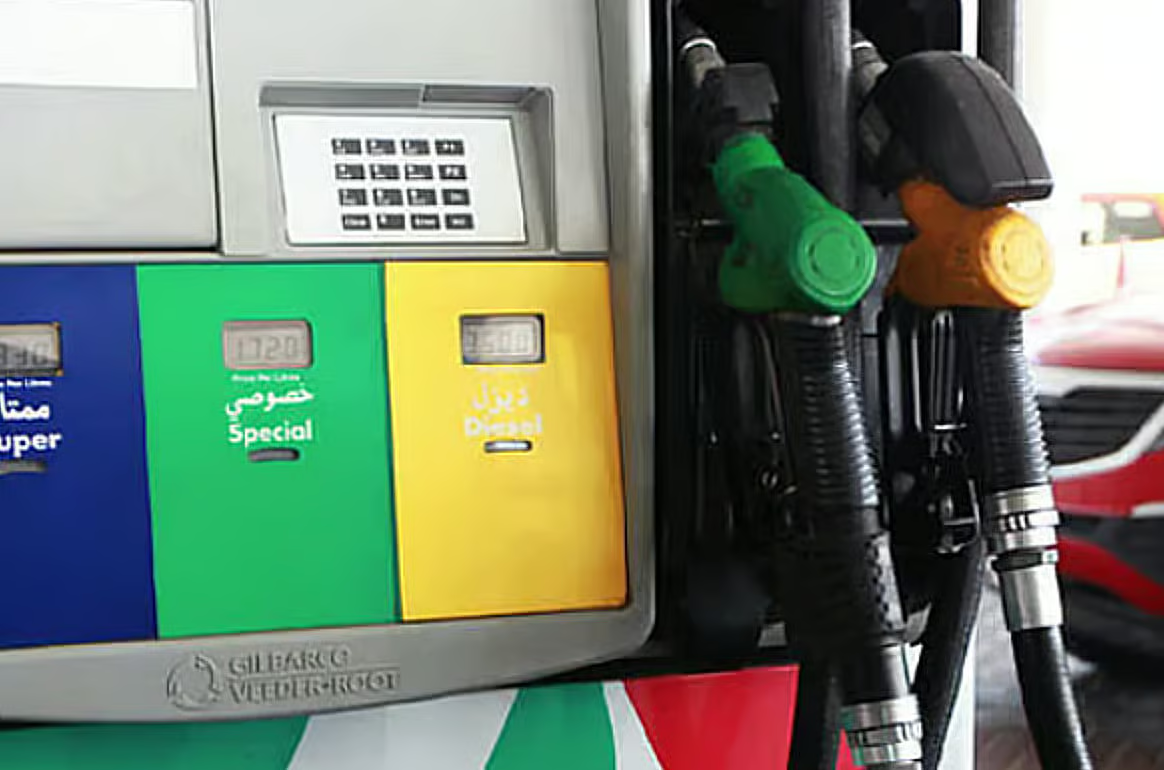
Petrol prices in the UAE may increase in March 2026 following a rise in global oil prices fueled by ongoing tensions between the United States and Iran. Brent crude surpassed $71 per barrel in February, reflecting growing geopolitical uncertainty in the Middle East.
In February, the UAE had reduced fuel prices slightly, with Super 98, Special 95, and E-Plus 91 retailing at Dh2.45, Dh2.33, and Dh2.26 per litre, respectively—a decrease of roughly eight to nine fils per litre from the previous month. Analysts now say those prices could be under pressure if oil markets continue to respond to the conflict.
“US-Iran tensions dominate the oil market, and prices are bloated with a significant geopolitical risk premium,” said Norbert Rücker, head of economics and next-generation research at Julius Baer. He added that while a military clash seems increasingly likely, such an escalation does not automatically translate into supply disruptions, citing ample global storage and spare production capacity.
Brent crude averaged $68.90 per barrel in February, up from $63.47 in January, while West Texas Intermediate traded at $71.38 per barrel on Tuesday evening. Some analysts warn that if tensions escalate further, prices could exceed $100 per barrel, though Julius Baer maintains a neutral view that the current premium will ease and oil prices may fall below $60 per barrel by mid-year.
Insurance costs for shipping through the Strait of Hormuz, a strategic chokepoint through which roughly 20 percent of the world’s oil passes, have recently risen after Tehran temporarily closed the strait. “Oil markets have come back into focus as tensions in the Middle East intensify,” said Daniela Hathorn, senior market analyst at Capital.com. “Iran’s strategic position near the Strait of Hormuz means any disruption could have significant consequences for global supply.”
The potential rise in UAE petrol prices underscores the broader vulnerability of regional and global energy markets to geopolitical events. While domestic fuel adjustments are modest and controlled, they remain closely linked to volatile global oil dynamics.
As international tensions continue, both analysts and consumers will be monitoring oil benchmarks and regional developments to gauge the possible impact on UAE fuel costs and broader economic conditions.
