

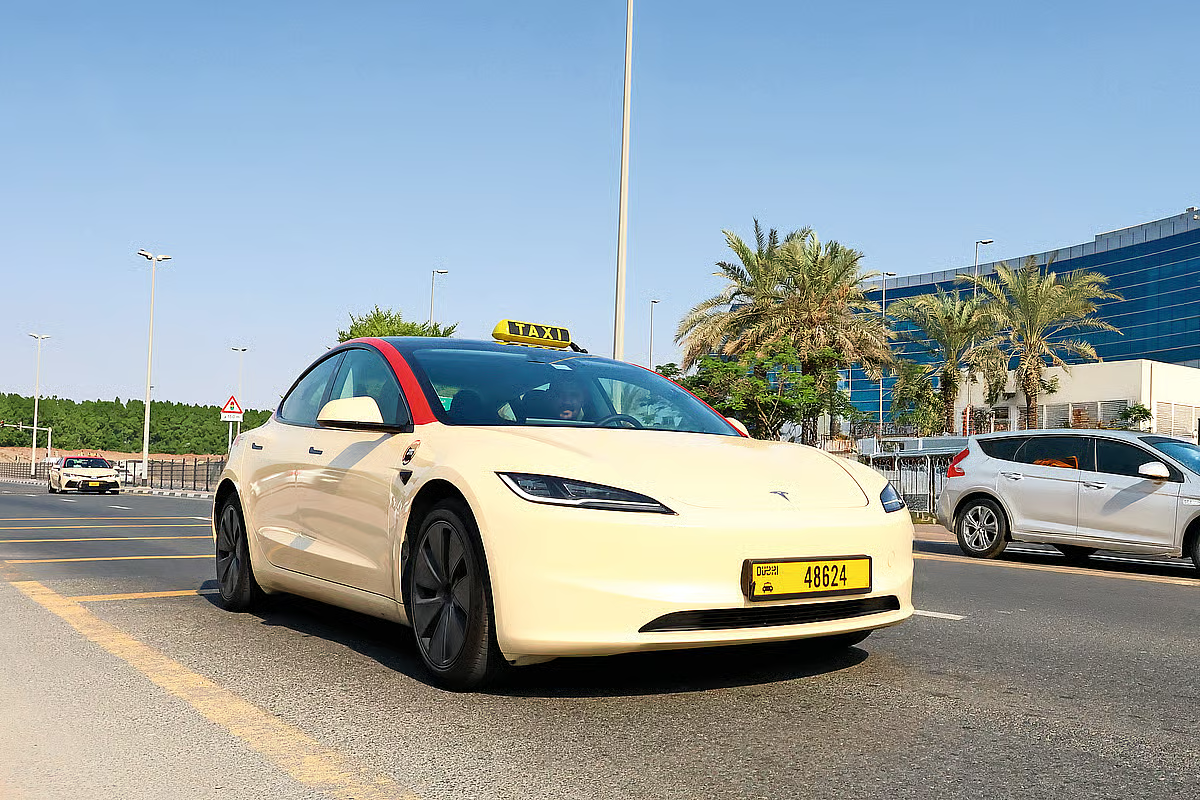
Dubai Taxi Company (DTC) plans to explore cryptocurrency as a new payment option for passengers, as the UAE’s ride-hailing operator reports a 7 percent rise in net profit to Dh356.1 million in 2025. CEO Mansoor Rahma Alfalasi said the company is working with the Roads and Transport Authority (RTA) to introduce crypto payments “very soon” as part of broader efforts to provide multiple payment gateways.
The announcement comes amid wider UAE adoption of regulated digital currencies. Earlier this month, AE Coin became an official payment method for federal government authorities, while Zand AED, the nation’s first multi-chain, regulated stablecoin, launched last year. Alfalasi did not provide a specific rollout date but indicated the company is moving quickly to integrate the technology.
Dubai Taxi is also advancing its autonomous vehicle program. The company plans to deploy 50 to 100 autonomous taxis this year, with the first trips set to begin next month. “For the first time, autonomous vehicles will operate through our fleets,” Alfalasi said. The initiative aligns with Dubai’s broader smart mobility ecosystem, which recently launched fully autonomous RT6 taxis developed by Baidu Apollo Go under the guidance of Sheikh Hamdan bin Mohammed bin Rashid Al Maktoum, Crown Prince of Dubai.
Expansion beyond Dubai is another priority. Dubai Taxi will introduce services in Abu Dhabi, Ajman, and Sharjah through a partnership with Bolt. The company also aims to add 2,000 e-bikes to its fleet, creating a similar number of jobs across the UAE.
Analysts note that Dubai Taxi’s plans reflect a growing trend among regional transport operators to adopt digital payments, autonomous vehicles, and green mobility solutions to remain competitive. “The UAE continues to lead in integrating fintech and smart mobility into everyday services,” said a local transport analyst.
The focus on cryptocurrency and autonomous fleets positions Dubai Taxi at the intersection of technology and urban mobility, offering passengers new payment options while expanding the company’s footprint across multiple Emirates. For Dubai and the wider UAE, these developments signal a shift toward smarter, tech-driven transportation infrastructure that could influence other regional mobility providers.
