
Close Menu
  • Home
  • News
  • Business
  • Technology
  • Lifestyle
  • Travel
What's Hot

Sands Resorts Macao sponsors MALT 2026 to connect with Middle East travel planners

January 28, 2026

The Hashi at Rixos Marina Abu Dhabi hosts skyline Valentine’s dinner

January 22, 2026

Qatar to host Global Entrepreneurship Congress in September 2026

January 22, 2026
  • About us
  • Editorial policy
  • Contact
X (Twitter)
Abu Dhabi Week
  • Home
  • News
  • Business
  • Technology
  • Lifestyle
  • Travel
Subscribe
Abu Dhabi Week
Home»Business»Cargill Overhauls Cocoa Supply Chain for Sustainability
Business

Cargill Overhauls Cocoa Supply Chain for Sustainability

Sam AllcockBy Sam AllcockJuly 3, 2025No Comments3 Mins Read
Facebook Twitter Pinterest LinkedIn Tumblr WhatsApp VKontakte Email
Share
Facebook Twitter LinkedIn Pinterest Email

Cargill has announced a sweeping transformation of its global cocoa supply chain, unveiling a series of strategic investments aimed at reducing carbon emissions, eliminating waste, and increasing operational efficiency from cocoa farms in West Africa to factories and warehouses in Europe.

The initiative integrates clean energy, circular logistics, and low-emission transport to support the company’s broader climate goal of reducing supply chain emissions by 30% per ton of product by 2030, while also cutting operational emissions by 10% by 2025.

“Sustainability isn’t a single project at Cargill—it’s how we operate,” said Emiel van Dijk, Managing Director of Cocoa & Chocolate Europe and West Africa. “From circular waste reuse to renewable transport and clean energy, we’re showing that climate action can scale, without compromise.”

In Côte d’Ivoire, cocoa shells once discarded are now used to power biomass boilers, turning agricultural waste into renewable fuel. In Ghana, a solar energy plant now powers operations in Tema, and new ISO tanks are replacing disposable packaging—cutting up to 100 metric tons of waste each month.

Once cocoa products arrive in Europe, they are funneled through a fully integrated, sustainable logistics network. At the heart of this network is solar-powered warehousing near Amsterdam, and a groundbreaking transportation solution: the world’s first fully electric barges, which carry cocoa beans to Cargill’s Zaandam factory. This initiative alone eliminates 190,000 kilograms of CO₂ emissions annually.

The electricity powering both the barges and Cargill’s Dutch cocoa processing sites is generated by Windpark Hanze, a renewable energy project developed in partnership with Vattenfall.

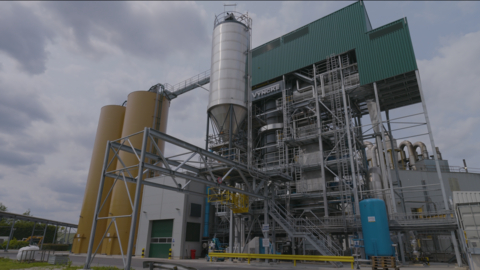
Further downstream, cocoa shells are reused again—this time in a newly commissioned biomass boiler in Amsterdam, which cuts greenhouse gas emissions by nearly 19,000 tons annually. Combined with the wind farm’s output, Cargill expects a total reduction of 31,000 tons of CO₂ per year, equivalent to a 90% drop in site emissions.

Transport of semi-finished cocoa products continues using BIO LNG-fueled trucks, while finished goods are stored at a high-tech warehouse in Zaandam, operated by Green Valley Cocoa Logistics. The facility incorporates solar panels, automated vehicles, and intermodal rail and barge systems to minimise last-mile impact.

The final stage brings semi-finished cocoa to Cargill’s own chocolate plants and to customers across Europe via short sea shipping and renewable-fueled vehicles.

“This is what sustainability at scale looks like,” van Dijk added. “It’s measurable, circular, and designed to serve both people and the planet.”

As one of the world’s largest cocoa processors, Cargill’s integrated approach highlights how global supply chains can evolve to meet ambitious climate targets—without compromising performance or scale.

Share. Facebook Twitter Pinterest LinkedIn Tumblr WhatsApp Email
Previous ArticleAMINA Bank Becomes First to Back Ripple Stablecoin
Next Article Dubai Customs, Police Train First Cohort of Inspectors
Sam Allcock
  • Website

Sam Allcock is a seasoned media professional and content strategist with a passion for storytelling across digital platforms. As a contributor to Abu Dhabi Week, Sam brings a sharp editorial eye and a deep appreciation for the culture, innovation, and lifestyle that define the UAE capital. With over a decade of experience in journalism and public relations, he covers everything from local events and business trends to travel, dining, and community highlights. When he's not writing, Sam is exploring the hidden gems of Abu Dhabi, always on the lookout for the next story worth sharing.

Related Posts

Sands Resorts Macao sponsors MALT 2026 to connect with Middle East travel planners

January 28, 2026

Qatar to host Global Entrepreneurship Congress in September 2026

January 22, 2026

CrowdStrike expands in-country cloud services across Saudi Arabia, India and the UAE

January 22, 2026

Azizi Developments partners with Dubai Land Department to support first Real Estate Diploma

January 21, 2026
Leave A Reply

Don't Miss
Business

Sands Resorts Macao sponsors MALT 2026 to connect with Middle East travel planners

By Sam AllcockJanuary 28, 20260

Sands Resorts Macao will serve as Platinum Sponsor at the 14th Annual Meetings Arabia &…

The Hashi at Rixos Marina Abu Dhabi hosts skyline Valentine’s dinner

January 22, 2026

Qatar to host Global Entrepreneurship Congress in September 2026

January 22, 2026

CrowdStrike expands in-country cloud services across Saudi Arabia, India and the UAE

January 22, 2026
About Us
About Us

Abu Dhabi Week delivers the latest business news, insights, and updates from the heart of the UAE.

Connect with us: advertising@abudhabiweek.ae | editor@abudhabiweek.ae.

Our Picks
New Comments
    X (Twitter)
    © 2026 Abu Dhabi Week

    Type above and press Enter to search. Press Esc to cancel.